Cites of the Dead
The history of buildings, people and cultuaral traditions at the cemetery provides many interesting facts. Early travelers referred to this as a ‘City of the Dead’ because the density of tombs reminded them of the urban city just outside the gates.
St. Louis Cemetery No. 1 is over 200 years old. Follow the links to discover the tombs, customs and people in this famous cemetery.
History of St. Louis Cemetery No. 1
The history of the buildings, notable individuals, and cultural traditions of St. Louis Cemetery No. 1 provides a fascinating window into early New Orleans history. Early travelers often referred to the cemetery as a “City of the Dead,” noting how the dense arrangement of above-ground tombs mirrored the busy streets of the French Quarter just beyond its walls.
Why St. Louis Cemetery No. 1 Is Called the “City of the Dead”
Visitors were struck by the cemetery’s urban appearance, with tightly packed tombs resembling city blocks. This distinctive layout reflects historic New Orleans burial practices, shaped by the region’s climate, geography, and colonial influences.
Oldest and Most Famous Cemetery in New Orleans
Established more than 200 years ago, St. Louis Cemetery No. 1 is the oldest and most well-known cemetery in New Orleans. The site showcases Spanish, French, and Creole burial traditions, preserved through generations of carefully maintained tombs.
Historic Tombs and Notable People
The cemetery is the final resting place of many individuals who played important roles in the cultural, political, and social history of New Orleans. Its historic tombs offer insight into the lives, beliefs, and customs of the city’s early residents.
Explore St. Louis Cemetery No. 1
Follow the links to learn more about the historic tombs, burial customs, and notable people of St. Louis Cemetery No. 1, one of the most visited and photographed landmarks in New Orleans.
- History of St. Louis Cemetery No. 1
- Why St. Louis Cemetery No. 1 Is Called the “City of the Dead”
- Oldest and Most Famous Cemetery in New Orleans
- Historic Tombs and Notable People
- Explore St. Louis Cemetery No. 1
- A Historic New Orleans Cemetery
- Burial Practices in Early New Orleans
- Spanish Colonial Health Concerns
- Location and Establishment
- Aboveground Tombs and Unique Burial Practices
- John H. B. Latrobe’s 1834 Depiction
- Cultural and Historical Significance
- Plan Your Visit
- "Wall/Block" Vault
- "Step" Tomb
- "Parapet" Tomb
- "Platform" Tomb
- "Sarcophagus" Tomb
- "Pediment" Tomb
- Society Tombs
- "Markers"
- "Ruins"
- Multi-Generational Tombs at St. Louis Cemetery No. 1
- Traditional Burial Practices
- Closure Tablets: A Family History in Stone
- The Barbarin Family Tomb
Historical Overview
In 1788, New Orleans lost many citizens to an epidemic and a great fire. The existing St. Peter Street cemetery, established at the edge of the early city, but just within the ramparts was filled. Common belief that interring the dead among the living contributed to outbreaks of disease, the Cabildo, following Spanish Royal decree, ordered a new cemetery to be established outside the city limits. St. Louis Cemetery, now called St. Louis Cemetery Number 1, was established in 1789 to the north of the city, outside the ramparts in the area now bound by Basin, Conti, Tremé and St. Louis streets.
St. Louis Cemetery No. 1
A Historic New Orleans Cemetery
Established in 1789, St. Louis Cemetery No. 1 is the oldest surviving cemetery in New Orleans. It was created following a devastating epidemic and the Great Fire of 1788, events that deeply shaped early New Orleans history.
Burial Practices in Early New Orleans
Before 1789, the dead were buried at St. Peter Street Cemetery, located at the edge of the early city but still within its defensive ramparts. As the population grew and deaths increased, the cemetery became overcrowded, raising concerns about public health.
Spanish Colonial Health Concerns
During the Spanish colonial period, it was commonly believed that burying the dead among the living contributed to the spread of disease. Acting under a Spanish royal decree, the Cabildo ordered that a new cemetery be established outside the city limits.
Location and Establishment
St. Louis Cemetery was founded north of the city, beyond the ramparts, in the area now bounded by Basin, Conti, Tremé, and St. Louis streets. Today, the cemetery sits within the historic Tremé neighborhood and just outside the French Quarter, making it one of the most significant historic sites in the city.
Tombs & Markers
St. Louis Cemetery No. 1 contains approximately 700 tombs, tomb ruins and markers in small urban-like precincts. The tombs are owned by individuals, families and societies and most are aboveground and designed for multiple and repeated burials. Although there are a variety of tomb types and styles, most of these small ‘buildings’ are of soft, handmade, local “river” or “lake” brick and high lime content mortar, covered with high lime, hydraulic lime or natural cement content stucco.
John H. B. Latrobe painted a colorful view of the early cemetery that gives us the first clear image of St. Louis Cemetery No. 1 in 1834. The pyramidal Varney tomb is prominent, and there are step and platform tombs illustrated in earth colored stuccos. Many of the site’s characteristic features are documented: multiple burial tombs, wall vaults and shell paths are visible, as well as ships in Carondalet’s canal beyond.
St. Louis Cemetery No. 1: Historic Cemetery in New Orleans
St. Louis Cemetery No. 1, located in the heart of New Orleans’ French Quarter, is one of the city’s oldest and most iconic cemeteries. Known for its distinctive aboveground tombs and rich history, it offers a rare glimpse into New Orleans’ burial traditions and cultural heritage. The cemetery contains approximately 700 tombs, tomb ruins, and grave markers, arranged in compact urban-like precincts.
Aboveground Tombs and Unique Burial Practices
Unlike traditional ground burials, most tombs in St. Louis Cemetery No. 1 are aboveground, designed for family and society burials that can accommodate multiple interments over generations. These tombs vary in style and architecture but share common features:
- Constructed from local “river” or “lake” bricks with high-lime mortar
- Finished with stucco containing hydraulic or natural cement
- Often designed as step tombs, platform tombs, or pyramidal structures
These distinctive designs reflect the city’s adaptation to its wet, flood-prone environment and its French and Spanish colonial influences.
John H. B. Latrobe’s 1834 Depiction
In 1834, architect and artist John H. B. Latrobe created a colorful painting that provides the first detailed visual record of St. Louis Cemetery No. 1. Latrobe’s work highlights:
- The pyramidal Varney tomb
- Step and platform tombs in earth-colored stuccos
- Wall vaults and shell-lined paths
- Ships in Carondalet’s Canal, linking the cemetery to early New Orleans waterways
This painting captures not only the cemetery’s architecture but also its place within the urban landscape of early New Orleans.
Cultural and Historical Significance
St. Louis Cemetery No. 1 is a symbol of New Orleans’ rich history, blending French Quarter heritage, Tremé cultural influences, and the city’s unique funerary traditions. The site continues to attract tourists, historians, and architecture enthusiasts, offering a window into how New Orleans communities commemorated their dead.
Exploring the cemetery provides insight into New Orleans’ colonial history, its social structures, and its enduring cultural practices. Visitors can see firsthand how tomb designs, family histories, and urban planning intersect in this historic landmark.
Plan Your Visit
Located just steps from the French Quarter, St. Louis Cemetery No. 1 is accessible for guided tours that provide historical context and highlight its most notable tombs, including the Varney tomb and wall vaults. For those interested in exploring New Orleans history, the cemetery offers an unforgettable experience connecting architecture, culture, and local heritage.
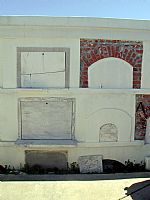
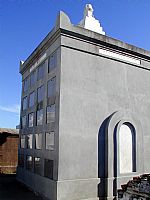
“Wall/Block” Vault
Multiple tiers of individual burial vaults of brick vault or stone slab construction, arranged to form a single block or perimeter enclosure wall
Tomb: Any mortuary structure that contains one or more burial vault(s)



“Step” Tomb
A low, single-vault semi-subterranean tomb possessing a stepped or moulded top and a top slab or end tablet
Tomb: Any mortuary structure that contains one or more burial vault(s)


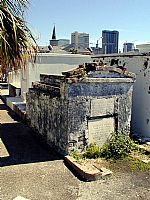
“Parapet” Tomb
A single or multiple vault tomb possessing a raised parapet front concealing the roof behind
Tomb: Any mortuary structure that contains one or more burial vault(s)
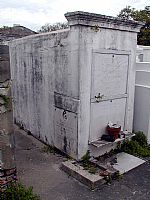

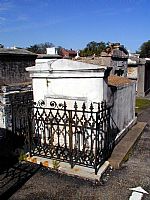
“Platform” Tomb
A single or multiple vault tomb whose height is equal to or less than its width
Tomb: Any mortuary structure that contains one or more burial vault(s)


“Sarcophagus” Tomb
A single or double platform tomb resembling a sarcophagus, usually on a raised base
Tomb: Any mortuary structure that contains one or more burial vault(s)


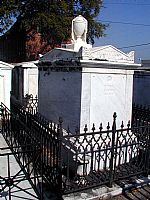
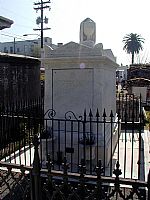
“Pediment” Tomb
A multiple vault tomb whose height is greater thanits width and whose top is surmounted by an integrated frontgable end pediment of flat, triangular or segmental design
Tomb: Any mortuary structure that contains one or more burial vault(s)


Society Tombs
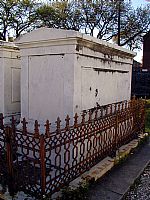
A Society Tomb is not a Tomb Type, and most of the famous Society Tombs are classified as Wall/Block Vaults since they contain multiple tiers of individual burial vaults, arranged to form a single block or wall. Society Tombs were built by social or communal groups to ensure that all members would have burial space and ceremony.
Tomb Typology is the study of tomb types based on distinguishing traits or characteristics.
Typology is based on physical “form”, not use.



“Markers”
Any non-tomb mortuary structure which marks a below-grade burial, but does not contain an interment and whose form is often sculptural. Can be Simple or Compound.
St. Louis Cemetery No. 1 contains approximately 700 tombs, tomb ruins and markers in small urban-like precincts. Most of the lots contain tombs, which are structures that contains one or more burial vault(s). Markers are found primarily in the Protestant Section and are any non-tomb structure which marks a below-grade burial, but does not actually contain a body. A marker form is often sculptural.
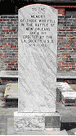
Simple Marker
A single element marker
- Headstone/footstone: An associated pair of upright slabs, usually of different height embedded in the ground or in a separate stone base, which defines the grave and is inscribed.
- Stele: A carved or inscribed stone slab or pillar used for commemorative purposes, taller and thinner than a headstone. Base not required.
- Plaque: Non-freestanding plain or ornamental tablet affixed to a wall or structure, but not a tomb/marker.
- Other: Any single architectural or sculptural form.


Compound Marker
A multiple element marker
- Table: A horizontal tablet supported by individual uprights, often in the form of a table.
- Basal: A horizontal tablet supported by a low solid wall base. (Resembles a platform tomb but does not house a burial within the structure.)
- Pyramid: A freestanding architectural form with four adjacent triangular walls that meet at a common apex and rest on a quadrilateral base.
- Die: Tomb with a prominent die, or middle portion of a pedestal between a base and the surbase, also called a dado.
- Pedestal: Any combination of column, obelisk, urn, or sculpture surmounting a pedestal or pedestal-base.
- Column: A full or truncated single pillar standing alone as a monument.
- Obelisk: A monumental, four-sided stone shaft, usually monolithic and tapering to a pyramidal tip.
- Other: Any architectural or sculptural combination.


“Ruins”
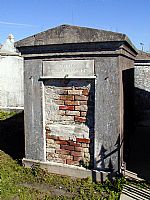
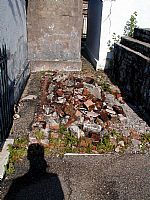
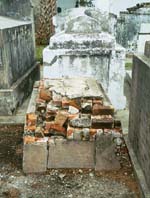
There are over 100 tombs lots that are empty or in advanced ruin state. Tomb type was not identified for lots like these. Empty spaces that once was meant for a tomb were also surveyed.

Burial Custom
Most of the tombs at St. Louis Cemetery No. 1 were designed to house many generations of a family or society group in the same tomb through multiple, sequential interment. Traditionally the dead were placed in wooden coffins in one of the vaults. The vault opening was loosely closed with mortared brick, and a stone closure tablet sealed the tomb. If the space was needed for another burial, the vault could be re-opened after at least 1 year and 1 day, the coffin removed and burned, and the decomposed remains pushed to the back of the tomb or placed beneath the vaults in the caveau below. This custom of multiple burial seemed strange to most Americans, particularly from the Northeast, but was familiar to French and Spanish settlers.
The closure tablet often names many names and dates from within the same family. If a closure tablet became full, it was usually mounted permanently to the side of the tomb and a new closure tablet of white marble was installed. One can read the history of many generations within the family, just by reading the tablets on the tombs.
Multi-Generational Tombs at St. Louis Cemetery No. 1
Most of the tombs at St. Louis Cemetery No. 1 were designed to accommodate multiple generations of a family or members of the same society group. This practice, known as sequential interment, allowed families to be laid to rest together over time, reflecting traditions brought by French and Spanish settlers to New Orleans.
Traditional Burial Practices
Traditionally, the deceased were placed in wooden coffins inside one of the tomb’s vaults. The vault was loosely closed with mortared brick, and a stone closure tablet sealed the tomb.
When additional space was needed for a new burial, the vault could be reopened after at least one year and one day. The coffin would be removed and burned, and the decomposed remains either pushed to the back of the tomb or placed beneath the vaults in the caveau below.
This practice of multiple burials often seemed unusual to Americans from the Northeast but was common among settlers in the French Quarter and Tremé neighborhoods, where family and community ties shaped burial customs.
Closure Tablets: A Family History in Stone
Closure tablets often list many names and dates from a single family. When a tablet became full, it was usually moved permanently to the side of the tomb, and a new white marble tablet was installed. By reading these tablets, visitors can trace the history of multiple generations, offering a tangible connection to New Orleans’ rich cultural heritage.
These tombs not only honor the dead but also serve as windows into the city’s past, linking families, neighborhoods, and centuries of New Orleans history.
Jazz
Many of America’s “Jazz Greats” are buried in the above ground cemeteries of New Orleans and their lives and accomplishments have been celebrated by Jazz Funerals.
The Barbarin Family Tomb
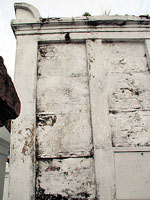
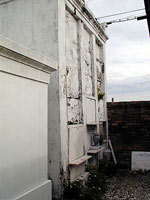
Tomb # 218 is the Tomb of the Barbarin Family. They are one of the most significant families of New Orleans’ jazz musicians. Interred within include Charles R. Barbarin, Sr. 8/30/1927 to 4/11/1980, musicians Izidore, Lucien and Charles Barbarin,and Rose Barbarin Barker Colombel, mother of Danny Barker, who was a musician, writer and historian and is buried in St. Louis Cemetery No. 2. This tomb is in need of some conservation work and tablet replacements and has been featured in the Adopt A Tomb program by Save Our Cemeteries, Inc.

Significant Inhabitants of St. Louis Cemetery No. 1
Saint Louis Cemetery No. 1 is a microcosm of New Orleans history. The diversity and integration of the early city’s population is as evident in death as it is in life. Some of its more famous inhabitants include:
- Barbarin Family – One of the most significant New Orleans jazz dynasties. Tomb #218.
- Etienne de Boré (1741-1820) – New Orleans’ first mayor. He is credited with being the first person to successfully granulate sugar. His grandson, Charles Gayarré, a noted Louisiana historian, is also buried in St. Louis Cemetery No. 1. Tomb #224.
- Blaize Cenas (1776-1812), Dr. Augustus Cenas (1809-1878) – Blaize Cenas was the first Postmaster General of the New Orleans. Tomb #108.
- Eliza Lewis Claiborne (1784-1804) – First wife of William C.C. Claiborne, the first American Governor of Louisiana. Also entombed here are her son and her brother, Micajah Green Lewis, who died in a duel defending the honor of his brother-in-law, the governor. Tomb #640.
- Clarice Durlade Claiborne (1788-1809) – The second wife of William C.C. Claiborne, Governor of the territory of New Orleans. Tomb #589.
- Daniel Clark (?-1812), Myra Clark Gaines (1810-1887) – Daniel Clark was the American Consul when Spain ruled New Orleans, and later the Territorial Delegate to Congress. Myra Clark Gaines, his illegitimate daughter, gained notoriety due a court case regarding her claim to Clark’s large land tracts after his death, resulting in expensive litigation which lasted over 65 years. Tomb #590.
- Pierre Derbigny (?-1829) – A noted jurist who, along with Louis Moreau-Lislet, drew up the Civil Code of Louisiana. He was Governor of the state from 1828 until his death in 1829. Tomb #476.
- Colonel Michael Fortier (1750-1819) – Royal armourer and soldier. Fortier fought with the Spanish under Galvez, aiding in the capture of Manchac and Baton Rouge, LA, from the British. He later became a member of the first New Orleans city council. Tomb #81.
- Grima Family – A prominent family descending from Albert Xavier Grima who emigrated from Malta in 1780. Descendants include a notary, a lawyer, a judge, an ophthalmologist, and a writer. Tomb #72.
- Benjamin Latrobe (1764-1820) – Founder of the architectural profession in the United States. He was buried in the Protestant section, but only a plaque stands in his memory, as his remains may have been lost when graves were moved. Location unknown.
- Marie Laveau (1794-1881) – Well known Voodoo Queen. Her remains are reputed to be interred in the Glapion family tomb, although there is no solid proof. Tomb #347.
- Louis Moreau-Lislet (1767-1832) – Co-author of the Louisiana Civil Codes of 1808 and 1825. Tomb #105.
- Bernard de Marigny (1788-1871) – Wealthy French landowner who participated in early Louisiana government. He lost most of his wealth through gambling. He is credited with introducing the game of craps to the United States. Tomb #606.
- Dr. Joseph Montegut (1735-1819); Edward Montegut (1806-1880) – Dr. Joseph Montegut was a leading physician and surgeon in Charity Hospital and proponent for the establishment of St. Louis Cemetery No. 1 outside the city. His grandson, Edward, was mayor of New Orleans from 1844-1846. Tomb #144.
- Ernest “Dutch” Morial (1929-1989) – New Orleans’ first African-American Mayor. Tomb #2003 is a new tomb, which replaced an earlier family tomb.
- Paul Morphy (1837-1884) – World famous chess champion. Tomb #366.
- Homer Plessy (1862-1925) – Plaintiff in the landmark 1896 Supreme Court case, Plessy vs. Ferguson, which declared separate as being equal. This was overturned by another landmark case, Brown vs. the Board of Education in 1954. Tomb #619.
- Carlos Trudeau (?-1816) – Surveyor General of Louisiana and a leading French and Spanish Colonial surveyor. Tomb #54.
- Numerous veterans of all the wars fought by residents of the area.
Tomb Colors
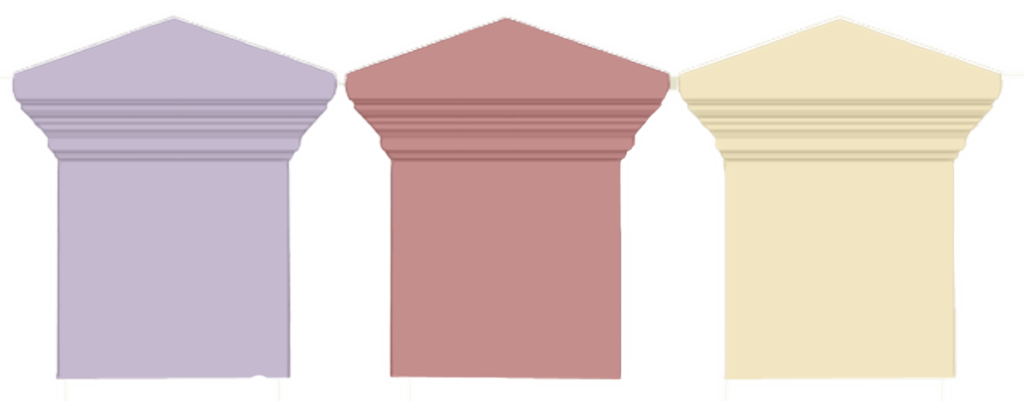
In 1834, John H.B. Latrobe painted a watercolor showing tombs limewashed in earthen yellows, grays, blues, and reds, as opposed to the harsh white tombs seen today.
Color Me!
A coloring book was created to illustrate the cemetery to young people as a vibrant cultural landscape.