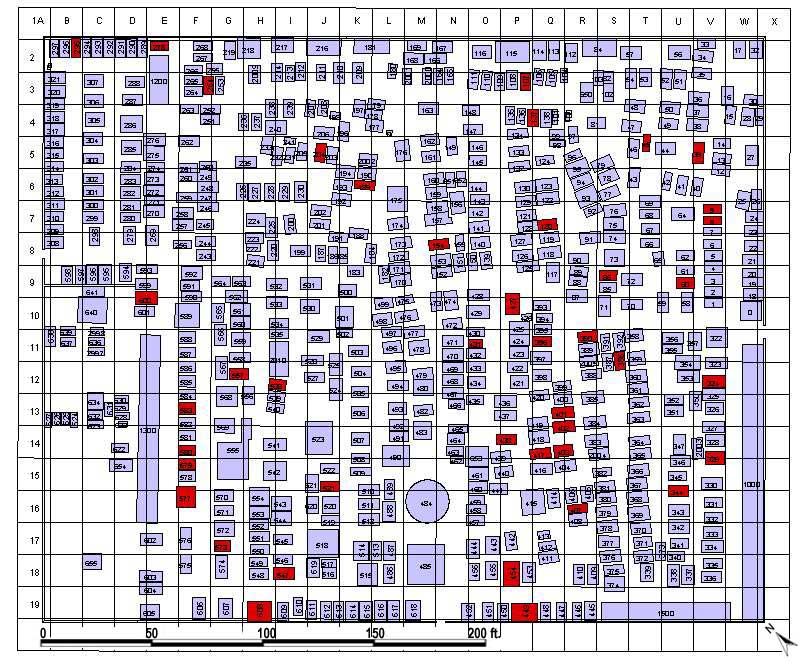
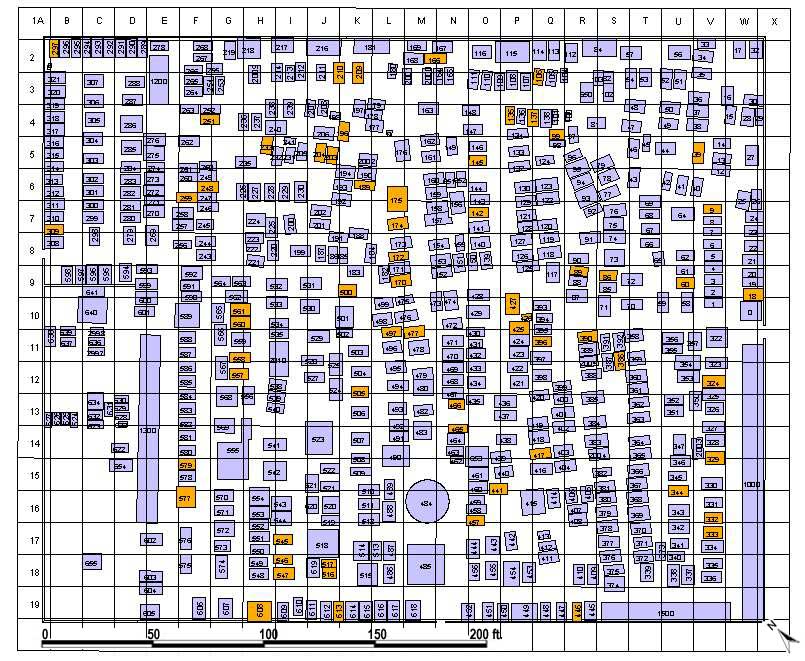
More Maps
Integrity
Material Integrity: The extent of existing original material; unimpaired or uncorrupted original craftsmanship. The condition of not being marred or violated by modern or inappropriate materials or interventions.
Overall Form Integrity: The extent of existing original form and details. Unimpaired or uncorrupted original craftsmanship. The condition of original detail not being unrecognizable due to loss or marred by modern or inappropriate materials or interventions.
Note: The tombs rated as “New/Rebuilt” were judged in relation to the original tomb design if archival documentation was available. If the original intent was not known, tombs were marked as N/A.
Primary Structure – The principle body/component of the tomb/marker.
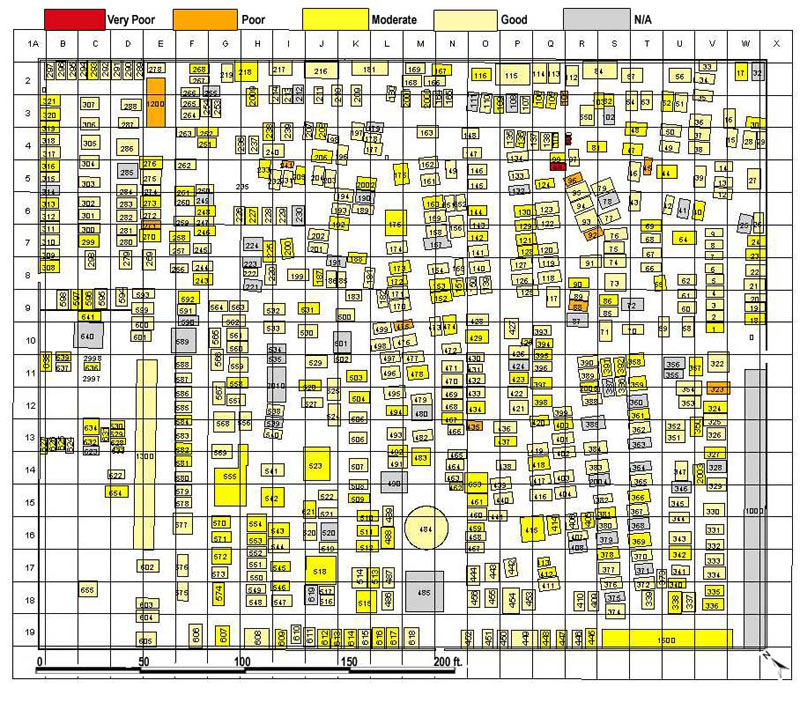
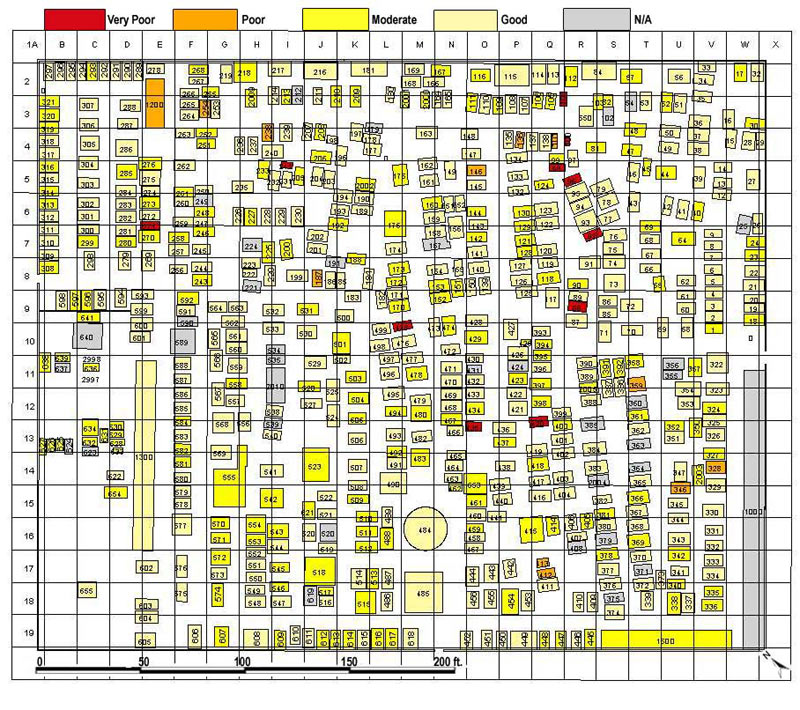
Roof – The top covering of the tomb/marker.
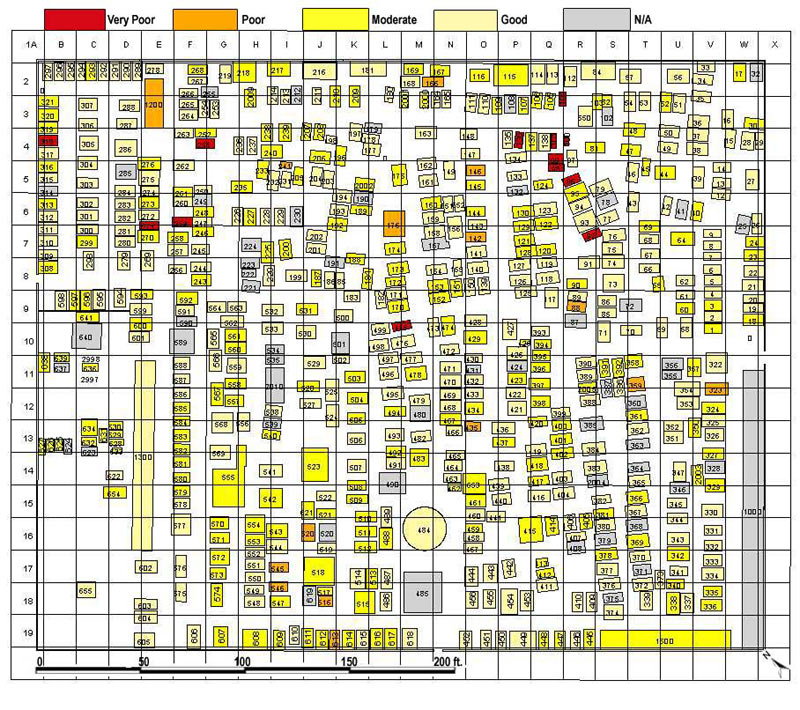
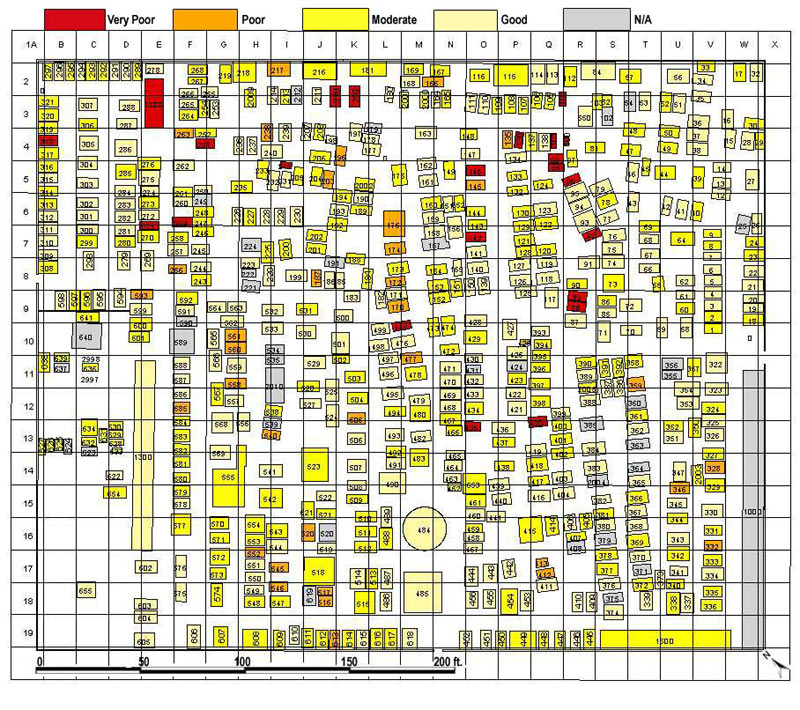
Stucco – The exterior coating of lime/cement/sand generally applied to the primary structure
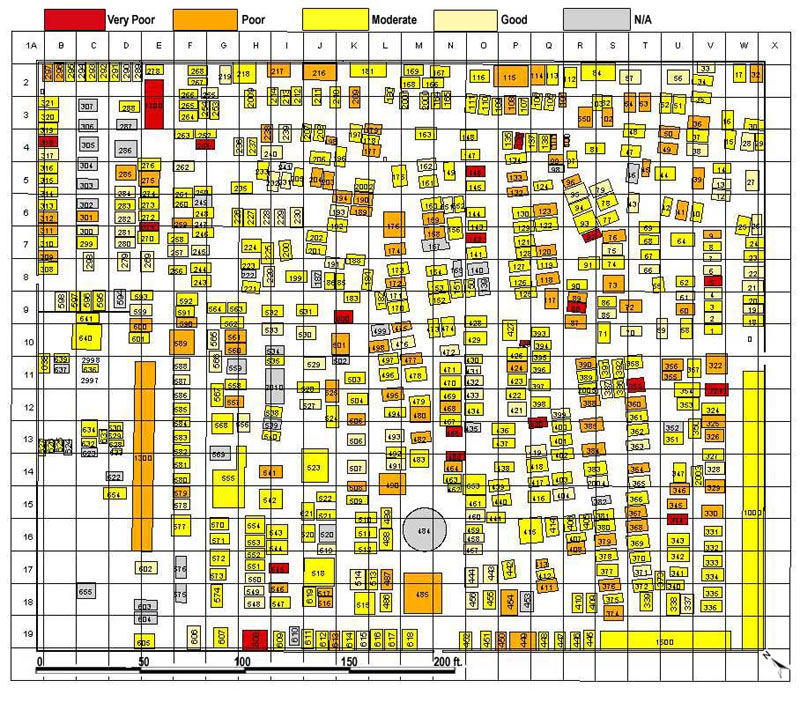
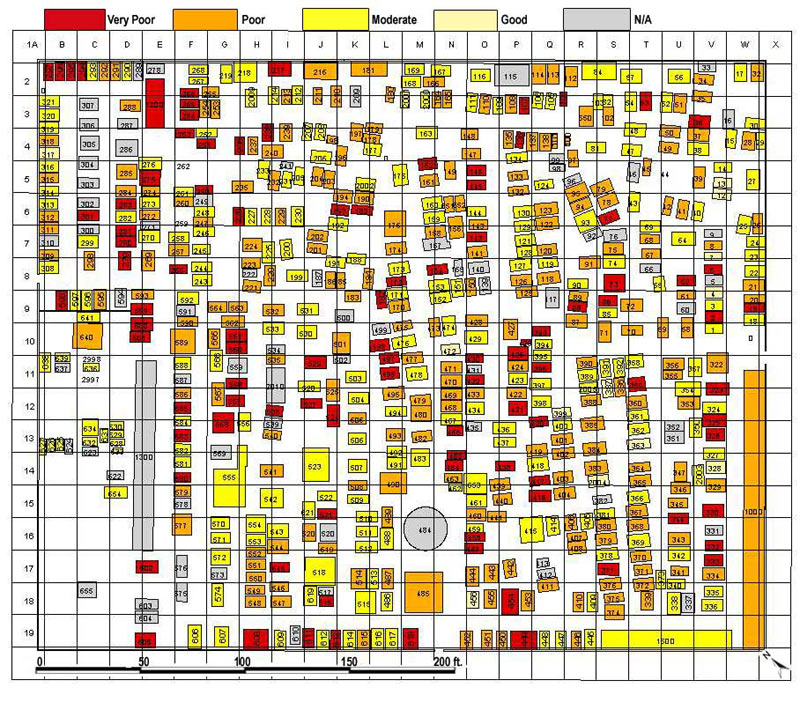
Surface Finish – Paints or washes applied to stucco or to the masonry or metal substrates. Material Integrity
Interesting Links – GIS Online
- ESRI.com – The leader in GIS software maintains a site with many resources and links to outside suppliers of map data.
- National Geographic.com – Full resourse for maps and educational material.
- GIS at the National Park Service – The National Park Service has extensive GIS projects underway. Over 200 parks now use GIS for documentation, interpretation and analysis.
- A Place in History: A Guide to Using GIS in Historical Research by Ian Gregory, AHDS, 2002 – An online manual on techniques, practices and ethics of using GIS for historical research.
- Lewis & Clark Expedition – Historic maps very effectively used in a GIS application to present history and geography. From the David Rumsey Map Collection.
- US.
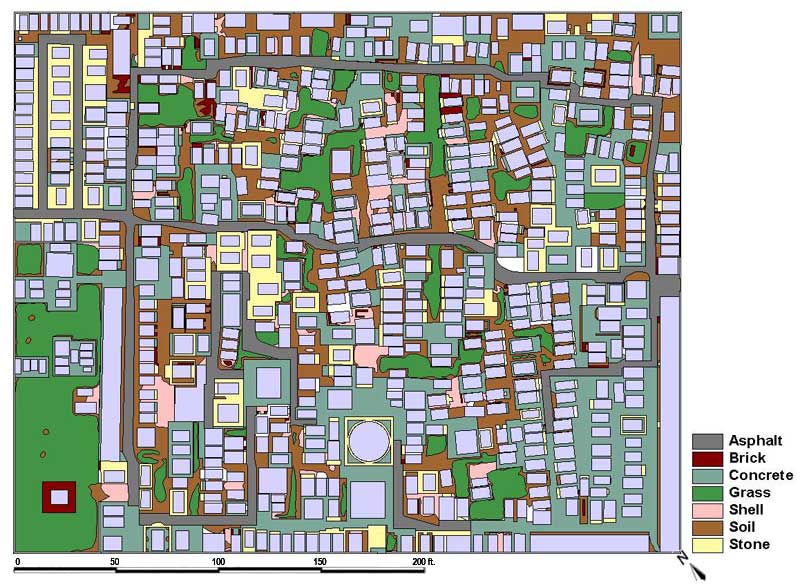
Groundcover at St. Louis Cemetery No. 1
First Date Evident on Tomb or Marker
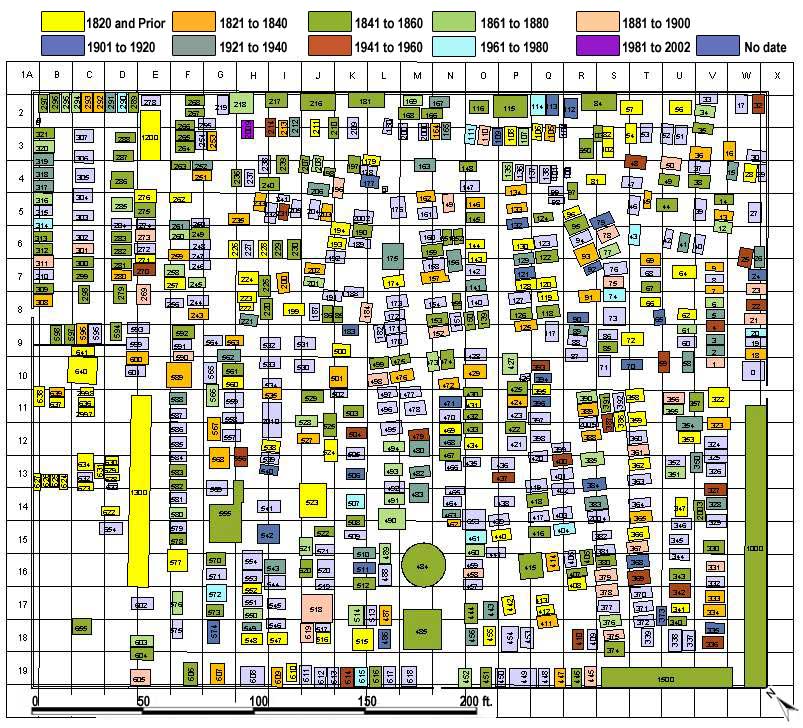
First Date Distribution
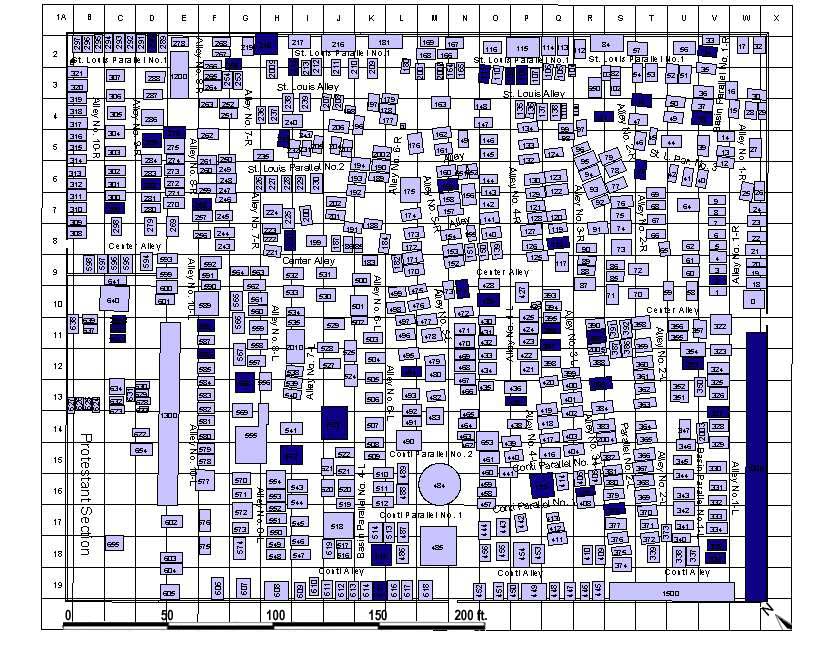
St. Louis Cemetery No. 1 – Military Markers
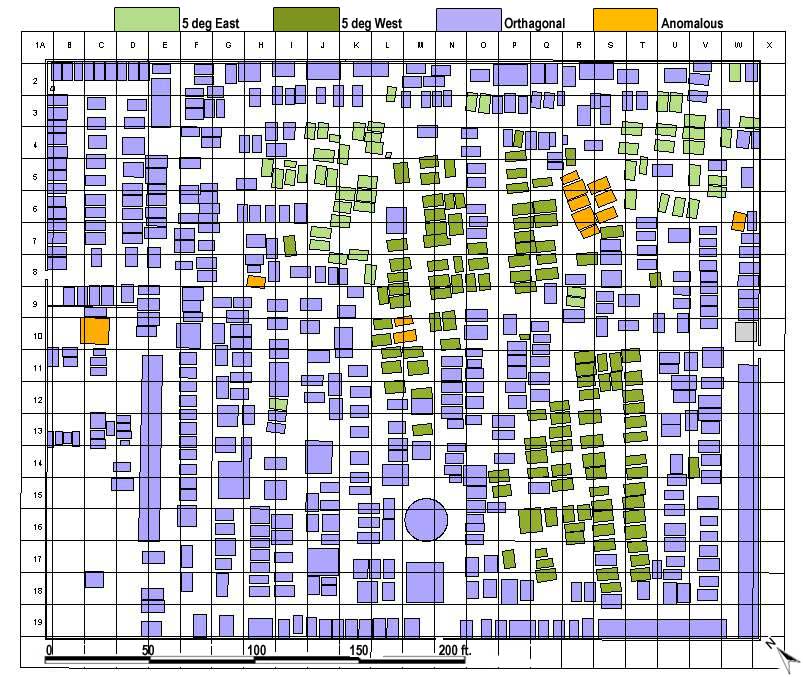
Orientation of Tombs
Using a combination of the Condition rating and the Integrity ratings, a priority list of tombs needing emergency stabilization was developed. This list was finetuned during a field inspection to include a few more tombs felt to be unstable or unsafe.
Priority Roofs & Structures